
1. Survey & quotation
We review the site or your photos and drawings, then send the scope, method, schedule, and a written quotation.


Industrial Services
Painting, repair, installation, and removal on towers, tanks, chimneys, roofs, and other tall structures — without scaffolding and without stopping operations longer than needed.
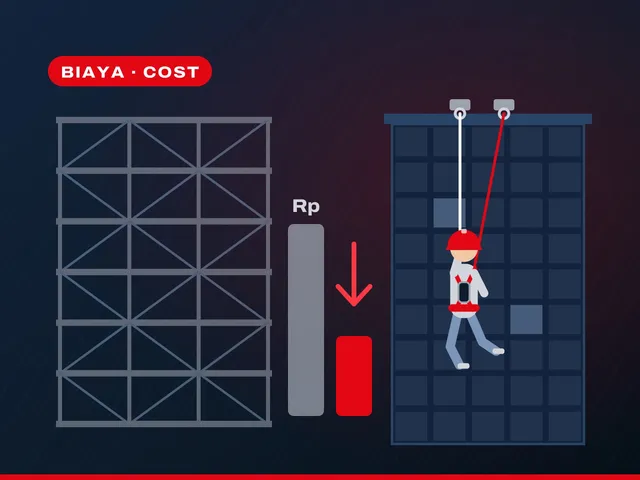
Scaffolding a tall structure can take days to erect and strike, takes up space, and adds exposure for other workers. For local repairs, painting, or light installation, a rope access team rigs within hours and starts work. We break the costs down in our article on rope access versus scaffolding.
We will tell you honestly: work that needs a wide platform for heavy materials, or very long stays at one point, usually suits scaffolding better. Our initial survey decides the most efficient method.
In factories, warehouses, or buildings that keep operating, work is arranged with the site manager: permits to work, energy isolation where needed, and protection of the area below the work zone.
For work bigger than repairs at height — renovation, construction, or design — our group company Inland handles contractor services and building maintenance, while RAC delivers the parts that need rope access.
Service details
Method comparison
A general guide to choosing an access method. The best method is decided at survey, based on the building and the work.
| Aspect | Rope access | Gondola | Scaffolding |
|---|---|---|---|
| Set-up time | Hours | Fast if permanently installed | Days |
| Reaching recesses & canopies | Very flexible | Limited to rails | Flexible but slow |
| Permanent roof installation | Not needed, anchors only | Needed | Not needed |
| Disruption below | Minimal, cordon moves with team | Moderate | High, takes up space |
| Best for | Planned maintenance & local repairs | Buildings with a BMU installed | Heavy, long work at one point |
BMU = building maintenance unit (permanent gondola). Many buildings use a combination of methods.
How we work
We review the site or your photos and drawings, then send the scope, method, schedule, and a written quotation.
A risk assessment, method statement, and rescue plan are prepared before work starts; permits are arranged with the site manager.
A team of Kemnaker-certified technicians works with a supervisor on site; the area below the work zone is secured.
Before-and-after photos and a work report are handed over with recommendations for the next maintenance cycle.
FAQ
Local work spread over many points — repainting, repairs, light installation, cleaning — is usually most efficient by rope access. Heavy materials or very long stays at one point can suit scaffolding better.
Usually not. Work is scheduled with the site manager, with the work area protected and energy isolated only where necessary.
Either works: materials from the owner, or we procure them to an agreed specification. It is all set out in the quotation.
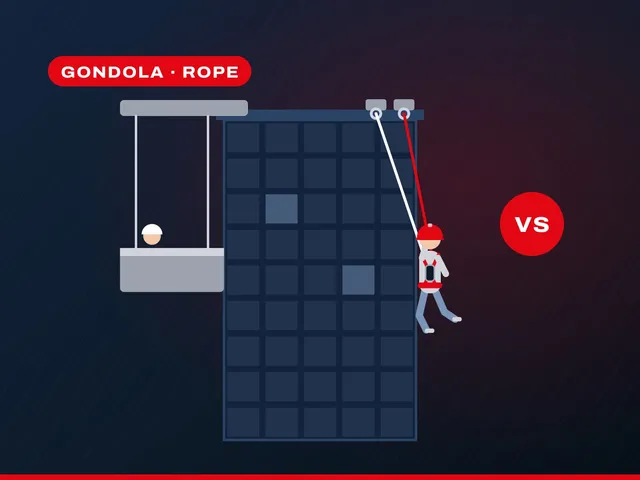
Gondolas excel on large, flat facades cleaned routinely. Rope access excels on complex facades, spot repairs, and buildings without a gondola. How to choose.
An honest cost comparison does not stop at the scaffold hire rate. Three cost lines are almost always left out of the calculation.
Send the location, the type of building or asset, and your target dates. We reply with a written quotation, usually the same working day.