

Fall Arrest, Fall Restraint, and Work Positioning: What Is the Difference?
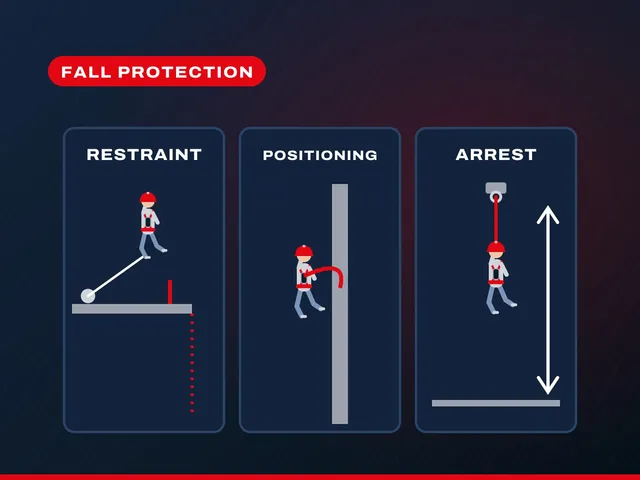
Three fall protection terms that are often confused. Which one prevents a fall, which one stops a fall, and why the order matters.


Kemnaker RI · TKPK Level 1
The entry programme for rope access work under Ministry of Manpower Regulation 9/2016: height safety, PPE inspection, rope manoeuvres, and basic rescue — closing with a Kemnaker RI competency test.
Ministry of Manpower Regulation 9/2016, the hierarchy of control, permits to work, and the responsibilities of each competence level.
Harnesses, ropes, connectors, descenders, ascenders, and fall arresters: how to wear, inspect, and log them.
Working knots, anchor points, and rigging a two-rope system under supervision.
Controlled ascent and descent, changeovers, passing knots, and edge transitions.
Rescuing a colleague from descent, managing a suspended casualty, and first aid.
Written and practical examination under Kemnaker RI rules, the basis for issuing the certificate and K3 licence.
A TKPK Level 1 competency certificate and K3 licence issued by Indonesia’s Ministry of Manpower, plus an RAC training completion certificate. Validity and renewal follow Kemnaker rules.
This programme is for people starting out on rope access — building technicians, façade crews, tower technicians, welders, or inspectors — who need to reach areas scaffolding or a gondola cannot.
Ministry of Manpower Regulation 9/2016 requires work at height to be carried out by competent workers. The certificate and K3 licence issued by Indonesia’s Ministry of Manpower (Kemnaker RI) are nationally recognised proof of competence, checked by labour inspectors, contractors, and building managers alike. Read more about the TKPK and TKBT schemes.
Theory and practice run side by side: every topic is practised at height under instructor supervision and repeated until it is right. Training equipment is provided; trainees only need safety boots and work clothing.
Once you have built up enough working experience, the next step is TKPK Level 2.
Course package
Dates
The next course dates are being finalised. Contact us for the nearest date or a dedicated cohort.
FAQ
The cost of TKPK Level 1 depends on the number of participants, the location (open course or in-house), and your company’s needs. Send us your requirements on WhatsApp and we reply with a written quotation listing everything included.
TKPK Level 1 duration and dates are confirmed on enrolment, following the syllabus and current Kemnaker competency test rules. Company courses can be scheduled on dates you choose.
The competency test covers theory and practice: work-at-height regulation, equipment inspection, technique for the grade, and rescue. Successful candidates receive a competency certificate and K3 licence from Kemnaker RI.
TKPK Level 1 covers work hanging on rope (rope access), while TKBT Level 1 covers climbing structures with fall arrest. Choose by how you work on site; many technicians take both.
FAQ
Both are Kemnaker RI work-at-height certifications. TKPK (Tenaga Kerja pada Ketinggian) covers rope access work and has three levels. TKBT (Tenaga Kerja Bangunan Tinggi) covers climbing structures such as towers, steel frames, and scaffolds with fall arrest, and has two levels.
Candidates who pass the competency test receive a competency certificate and K3 licence for their grade from Indonesia’s Ministry of Manpower, plus an RAC training completion certificate.
Validity and renewal of the certificate and K3 licence follow current Kemnaker rules. We help trainees prepare renewal paperwork before expiry.
Three fall protection terms that are often confused. Which one prevents a fall, which one stops a fall, and why the order matters.
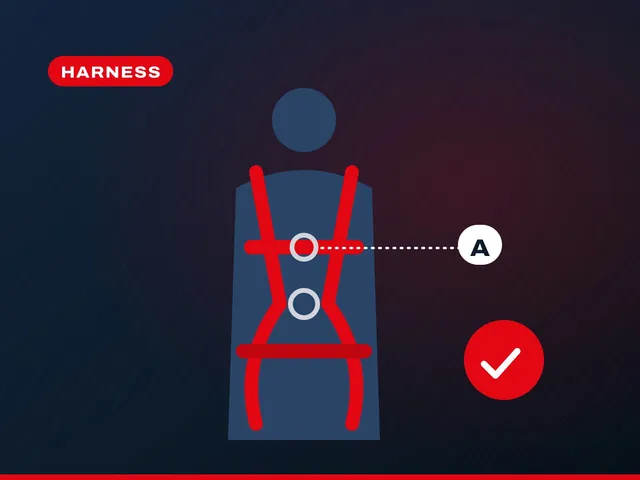
A loose or upside-down harness can injure you when it arrests a fall. Seven steps to wear it correctly, plus the mistakes we see most often.
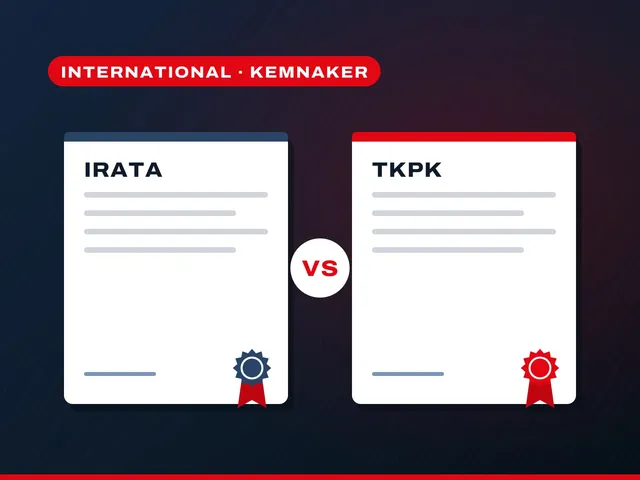
IRATA is recognised internationally; TKPK is required by Indonesian regulation. The differences, when you need which, and why many technicians end up holding both.
Send your name, the number of participants, and the month you are aiming for. For a group from one company, the course can run at your site.