



Fall Arrest, Fall Restraint, and Work Positioning: What Is the Difference?
Three fall protection terms that are often confused. Which one prevents a fall, which one stops a fall, and why the order matters.
Published · Tim Rope Access Center
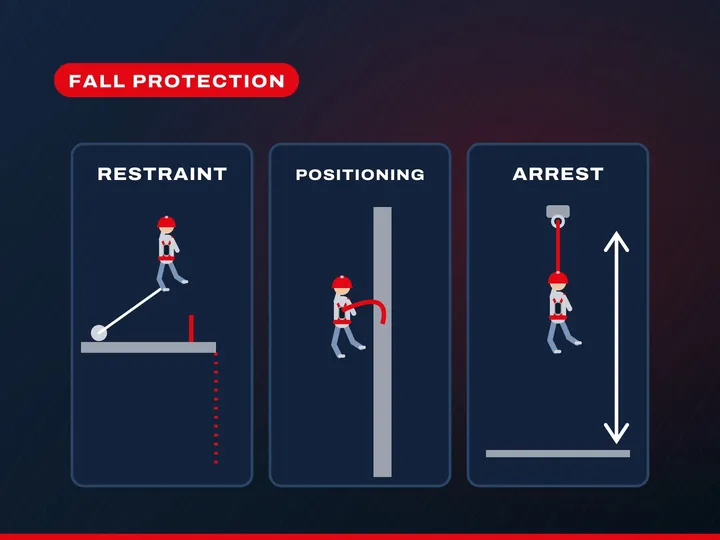
Table of Contents
In work at height, three terms are often used interchangeably even though they mean different things: fall restraint, work positioning, and fall arrest. Mixing them up can mean choosing the wrong equipment.
Fall restraint: never reaching the edge
The worker is tethered by a rope or lanyard that is too short to reach the edge. Because they cannot get to the drop, no fall can happen. Example: a worker on a flat roof connected to a lifeline in the middle of the roof.
Strength: the safest option in the fall protection order. Limit: only suitable when the job does not require going near the edge.
Work positioning: supported at the work spot
The worker is held in position so both hands are free, such as a tower climber leaning on a positioning lanyard, or a rope access technician suspended on a working rope. It must always be backed up by fall arrest.
Fall arrest: stopping a fall that has happened
A system that stops a fall after it starts: a full body harness, a lanyard with an energy absorber or a fall arrester, and a strong anchor point. Two things must be planned:
- Fall clearance. Lanyard length, absorber extension, body height, and a safety margin must fit in the space below the worker. If not, the worker still hits the ground.
- Rescue. A worker left hanging after a fall must be brought down quickly. See an untested rescue plan is not a plan.
The order of choice
Following the planning principle in Regulation 9/2016:
- Avoid work at height if the job can be done from below.
- Use collective protection (guardrails, platforms, scaffolding with rails).
- Use fall restraint where possible.
- Use work positioning with fall arrest backup.
- Use fall arrest and prepare a rescue.
Where this is taught
These concepts are the foundation of our TKBT Level 1 and TKPK Level 1 classes. To pick the right certificate, read TKPK or TKBT.
Related Articles

Regulation 9/2016 Explained: Indonesia's Work-at-Height Safety Rules
Indonesia's main work-at-height regulation in plain language: the five mandatory elements, who must be competent, and what it means for employers.
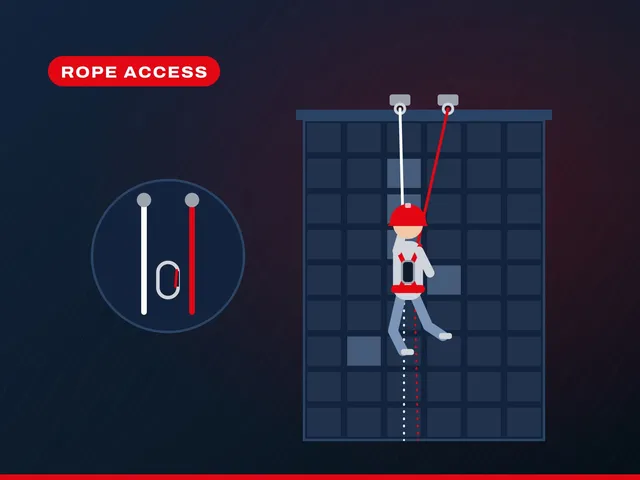
What Is Rope Access? Meaning, How It Works, and the Rules in Indonesia
A method of working at height with two independent rope systems. How it works, when it is the right choice, and the rules that apply in Indonesia.
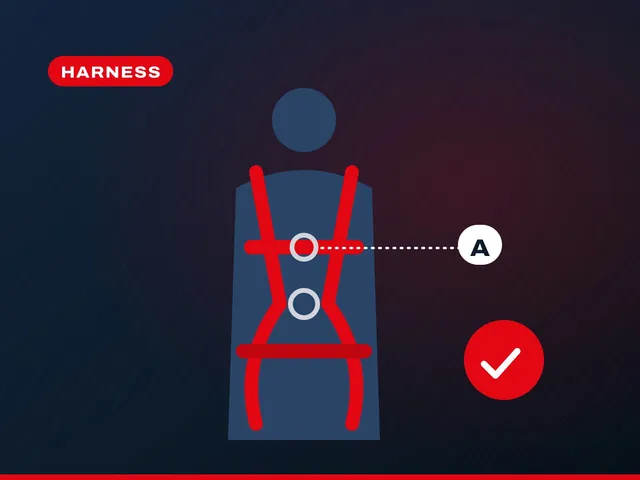
How to Wear a Full Body Harness Correctly: 7 Steps and Common Mistakes
A loose or upside-down harness can injure you when it arrests a fall. Seven steps to wear it correctly, plus the mistakes we see most often.