



TKPK or TKBT? Choosing a Kemnaker Work-at-Height Certificate
Two Kemnaker schemes for work at height, two different ways of working. A practical guide for technicians and HSE managers choosing the certification they actually need.
Published · Tim Rope Access Center
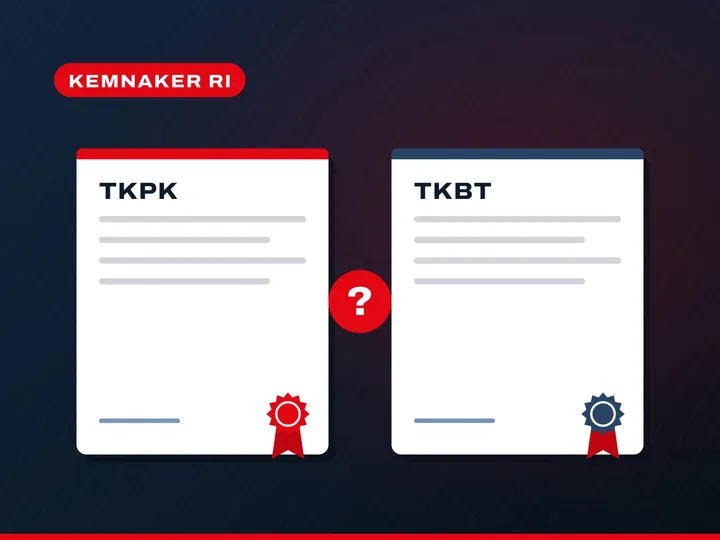
Table of Contents
This question reaches our desk almost every week, from two directions at once: workers who want to start a career at height, and HSE managers who have to meet contract requirements. Both usually arrive at the same question: TKPK or TKBT?
Two schemes, one regulation
Both are work-at-height certifications issued by Indonesia’s Ministry of Manpower (Kemnaker RI) under Regulation 9/2016. The difference lies in how the worker reaches and stays at the work position.
TKPK (Tenaga Kerja pada Ketinggian) is the rope access scheme: the worker hangs on two rope systems — a working line and a safety line — and moves up, down, or across along the rope. TKPK has three levels, from Level 1 technician to Level 3 supervisor.
TKBT (Tenaga Kerja Bangunan Tinggi) is the scheme for climbing structures — towers, steel frames, scaffolds, poles — using fall arrest such as twin lanyards. TKBT has two levels: Level 1 and Level 2.
A quick way to choose
Ask one question: does the worker hang on a rope, or stand and climb on the structure?
- Cleaning glass and repairing building façades, painting tank walls, inspecting chimney sides — the worker hangs on rope. That is TKPK territory.
- Climbing telecom towers, working on steel frames, erecting scaffolds — the worker climbs the structure and moves between anchors. That is TKBT territory.
Many real jobs mix the two. A technician who climbs a tower and then descends on rope to reach an antenna, for example, should hold both certificates.
For technicians: where to start
If you are starting out, pick the scheme that matches the work you are most likely to get. High-rise building maintenance and industry need a lot of TKPK; telecoms and steel construction need a lot of TKBT.
Once you are working and building up documented hours, move up a level. Log every job from day one — experience that is not recorded is hard to prove when you apply for the next grade. We cover the ladder in our rope access career map.
For HSE managers: read the contract, not the brochure
The most expensive mistake we see is certifying a whole team on a scheme that does not fit the work. Before booking training, check three things: the method of work on site, the competence requirements in the contract or permit to work, and the team structure — who works and who supervises.
For rope access teams, make sure a competent supervisor is on every site. For high-risk work, plan rescue capability on site as well.
A certificate is not the end
Any certificate only states that someone met a standard on the day of the test. What keeps people safe is daily habit: pre-use equipment checks, a rescue plan that has actually been tested, and a culture in which anyone may stop the work.
Read also: how to choose a training provider · IRATA vs Kemnaker TKPK
Related Articles
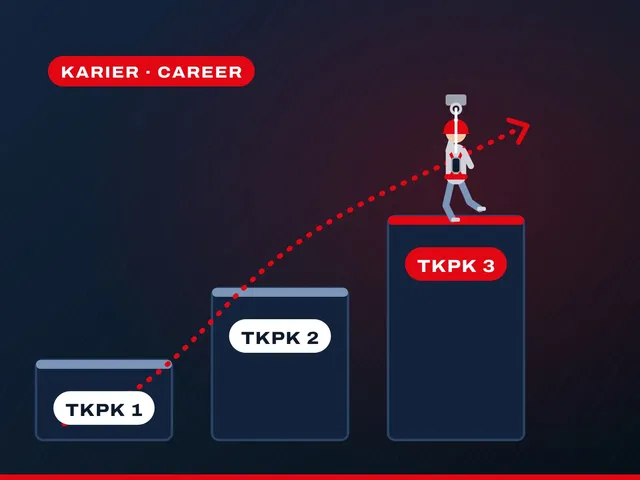
The Rope Access Career Ladder in Indonesia: From TKPK 1 to TKPK 3
From beginner to supervisor: certification levels, the experience to build up, and the extra skills that make a rope access technician in demand.
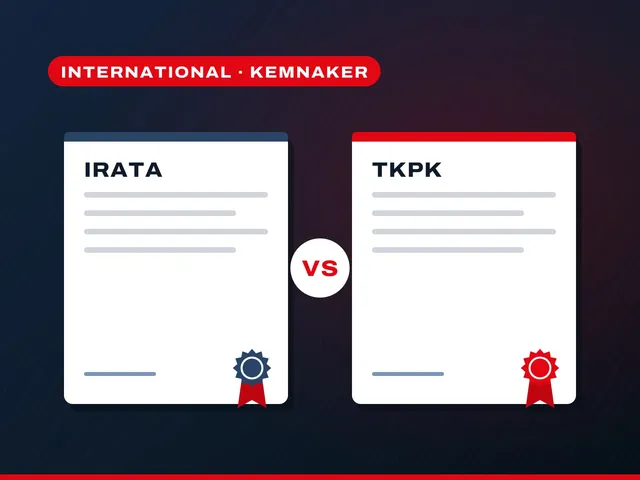
IRATA vs Kemnaker TKPK: Which Rope Access Certificate Do You Need in Indonesia?
IRATA is recognised internationally; TKPK is required by Indonesian regulation. The differences, when you need which, and why many technicians end up holding both.
How to Choose a Legitimate Rope Access Training Provider: 7 Things to Check
A certificate nobody recognises is no certificate at all. Seven things to check before you pay for rope access or work-at-height training.