



IRATA vs Kemnaker TKPK: Which Rope Access Certificate Do You Need in Indonesia?
IRATA is recognised internationally; TKPK is required by Indonesian regulation. The differences, when you need which, and why many technicians end up holding both.
Published · Tim Rope Access Center
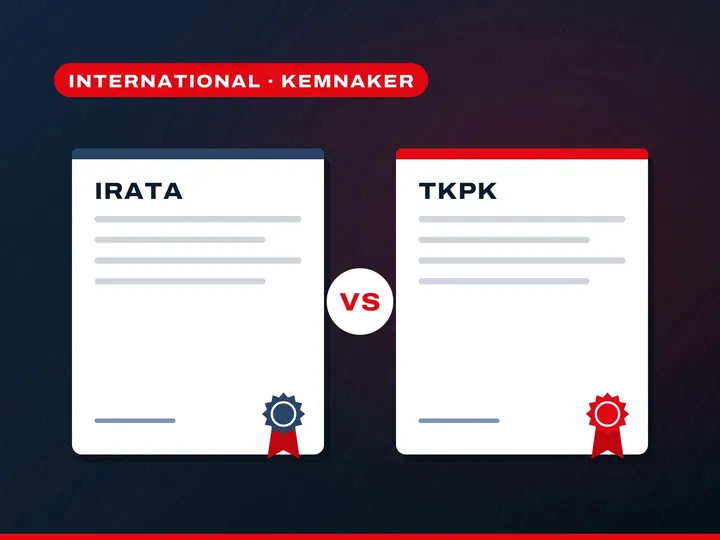
Table of Contents
Two names often appear together in job ads: IRATA and TKPK. Both are about rope access, but they come from different systems. Knowing the difference helps you choose the right order of certification.
The key differences
| IRATA | Kemnaker TKPK | |
|---|---|---|
| Issuer | IRATA International (industry association, UK) | Indonesian Ministry of Manpower |
| Basis | Association scheme and code of practice | Regulation 9/2016 |
| Levels | Level 1, 2, 3 | TKPK 1, 2, 3 |
| Status in Indonesia | Industry recognition, often requested by international clients | National regulatory requirement |
| Proof | IRATA certificate and logbook | Competency certificate and K3 licence |
IRATA progression rules
According to IRATA guidance, technicians can move up to Level 2 and Level 3 after logging 1,000 on-rope working hours and at least 12 months at the previous level. Certificates are valid for three years and must be revalidated. Always check the latest rules on the IRATA website before you enrol.
TKPK levels
TKPK also has three levels, with the role growing from a worker under supervision, to a technician who can rig systems and rescue a colleague, to a supervisor who plans the work and rescue. Details are on the TKPK Level 1, Level 2, and Level 3 pages, and in the rope access career ladder.
Which do you need?
- Working on projects in Indonesia — Kemnaker TKPK is mandatory. Employers may only assign workers with a valid certificate and K3 licence, and this is what an audit checks.
- Oil and gas or multinational clients — often ask for TKPK and IRATA.
- Working abroad — IRATA or another scheme recognised in that country is usually more relevant.
For most technicians in Indonesia, a sensible order is: start with TKPK, build up hours, then add an international certificate if the work demands it. Compare also the Kemnaker vs BNSP routes.
RAC focuses on Kemnaker RI certification. See our training programmes and class schedule.
Related Articles
Regulation 9/2016 Explained: Indonesia's Work-at-Height Safety Rules
Indonesia's main work-at-height regulation in plain language: the five mandatory elements, who must be competent, and what it means for employers.
TKPK or TKBT? Choosing a Kemnaker Work-at-Height Certificate
Two Kemnaker schemes for work at height, two different ways of working. A practical guide for technicians and HSE managers choosing the certification they actually need.
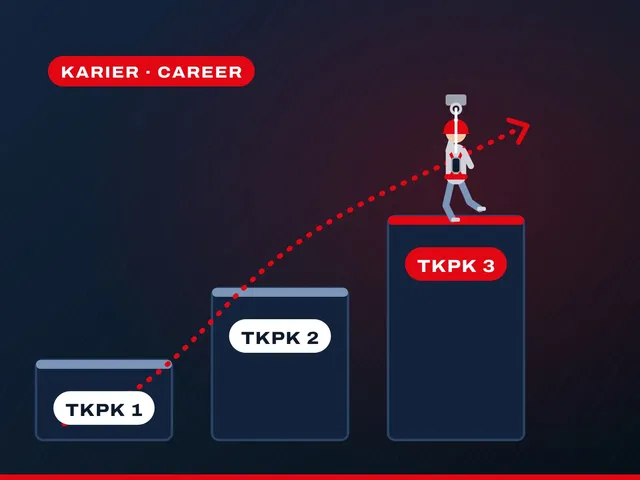
The Rope Access Career Ladder in Indonesia: From TKPK 1 to TKPK 3
From beginner to supervisor: certification levels, the experience to build up, and the extra skills that make a rope access technician in demand.