
1. Survey & quotation
We review the site or your photos and drawings, then send the scope, method, schedule, and a written quotation.

Industrial Services
Glass cleaning, sealant replacement, repairs, and repainting for multi-storey façades by rope access — reaching areas a gondola cannot, with no permanent installation.
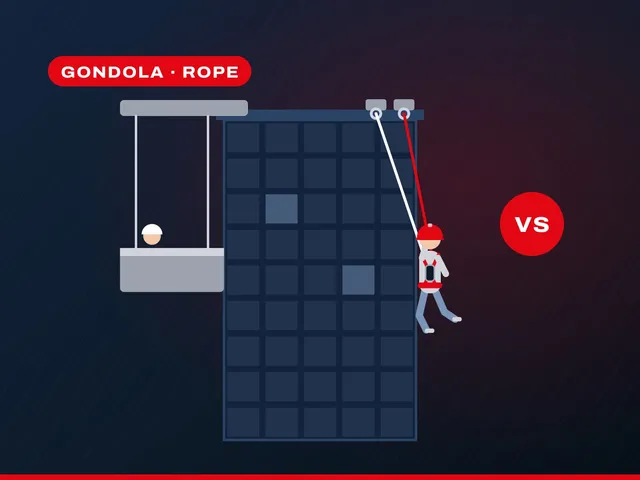
A gondola needs rails and a permanent rooftop installation, and often cannot reach façade recesses, canopies, or narrow elevations. Rope access only needs suitable anchor points: systems are rigged within hours, move quickly between elevations, and disturb occupants no longer than necessary.
The area below the work zone is cordoned off and signed, tools are tethered against drops, and every team works with a supervisor and a rescue plan. For fully occupied buildings, work can be scheduled outside peak hours.
Glass cleaned regularly and sealant replaced on time prevent permanent staining, water ingress, and frame damage. We can set up a planned maintenance schedule — monthly, quarterly, or yearly — to suit the building.
RAC is part of the Inland group. For wider building care — from building glass cleaning to building maintenance and renovation — the Inland and RAC teams work together to the same safety standard.
Service details
Method comparison
A general guide to choosing an access method. The best method is decided at survey, based on the building and the work.
| Aspect | Rope access | Gondola | Scaffolding |
|---|---|---|---|
| Set-up time | Hours | Fast if permanently installed | Days |
| Reaching recesses & canopies | Very flexible | Limited to rails | Flexible but slow |
| Permanent roof installation | Not needed, anchors only | Needed | Not needed |
| Disruption below | Minimal, cordon moves with team | Moderate | High, takes up space |
| Best for | Planned maintenance & local repairs | Buildings with a BMU installed | Heavy, long work at one point |
BMU = building maintenance unit (permanent gondola). Many buildings use a combination of methods.
How we work
We review the site or your photos and drawings, then send the scope, method, schedule, and a written quotation.
A risk assessment, method statement, and rescue plan are prepared before work starts; permits are arranged with the site manager.
A team of Kemnaker-certified technicians works with a supervisor on site; the area below the work zone is secured.
Before-and-after photos and a work report are handed over with recommendations for the next maintenance cycle.
FAQ
Typically every 3–6 months, depending on location, pollution, and glass type. Buildings near main roads or industrial areas usually need it more often. We can recommend a schedule after seeing the building.
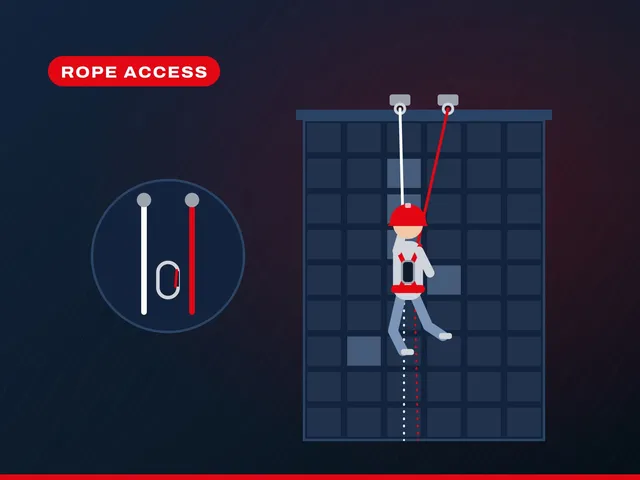
Rope access uses two independent rope systems — a working line and a safety line — so the failure of one does not result in a fall. With certified technicians, a rescue plan, and equipment checked every day, it is a very safe method for façade work.
The area directly below the work zone is cordoned off while work is under way. The cordon moves with the team, so the building stays accessible.
Yes. For busy buildings, work can be scheduled early in the morning, at weekends, or outside operating hours, as long as weather and light are safe.
Gondolas excel on large, flat facades cleaned routinely. Rope access excels on complex facades, spot repairs, and buildings without a gondola. How to choose.
A method of working at height with two independent rope systems. How it works, when it is the right choice, and the rules that apply in Indonesia.
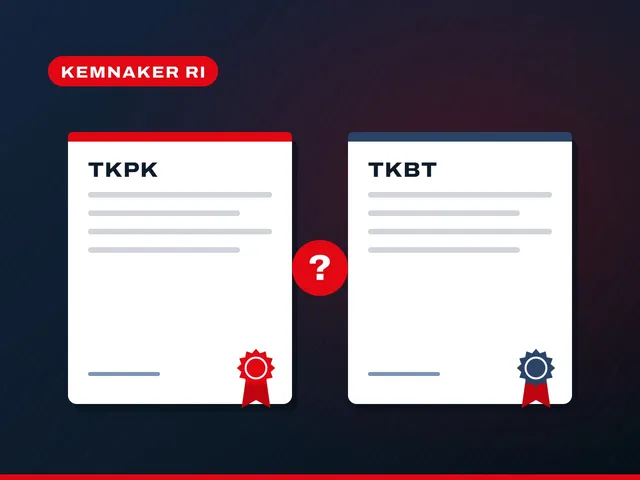
Two Kemnaker schemes for work at height, two different ways of working. A practical guide for technicians and HSE managers choosing the certification they actually need.
Send the location, the type of building or asset, and your target dates. We reply with a written quotation, usually the same working day.