



Rope Access Anchor Points: Requirements, Types, and How to Choose Them
Every rope access system depends on its anchors. The main types, what strength the standard asks for, and the rigging mistakes we see most often.
Published · Tim Rope Access Center
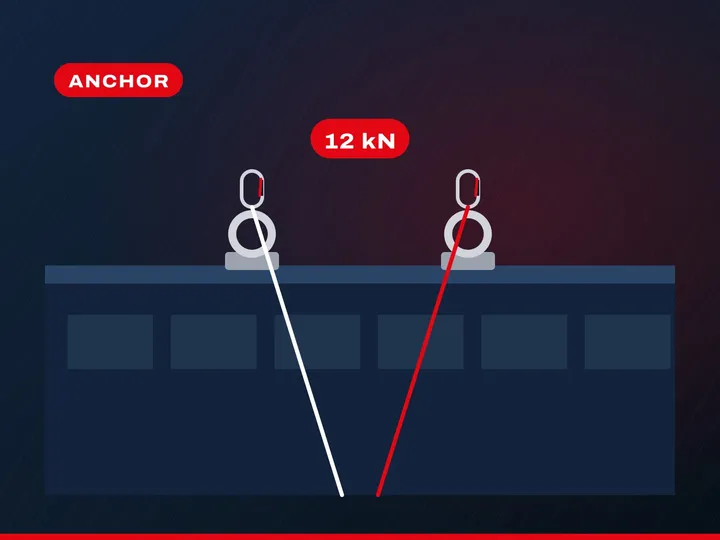
Table of Contents
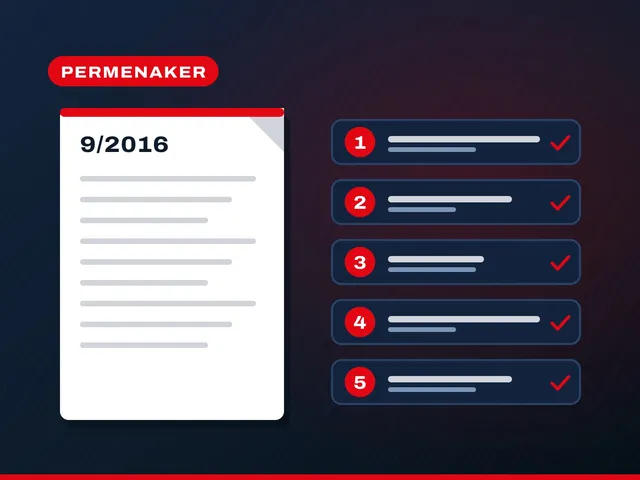
The best harness and the most experienced technician mean nothing if the anchor fails. Indonesia’s Regulation 9/2016 even lists anchors alongside PPE and fall protection devices as a mandatory requirement.
Types of anchor point
- Structural anchors — strong parts of the building such as concrete columns, steel beams, or roof frames, connected with slings or anchor straps.
- Permanent anchors — rings or eye bolts installed on a roof for facade maintenance. Ideally they have pull-test records and periodic inspections.
- Temporary anchors — devices installed for a specific job and then removed, such as beam clamps, tripods, or counterweights.
How strong is strong enough
EN 795:2012 requires metallic anchor devices to hold a static load of 12 kN for one user, plus 1 kN for each additional user the manufacturer permits. Devices with non-metallic load-bearing parts without proven durability are tested higher. For structural anchors chosen on site, the number is not the only measure — the condition of the concrete, corrosion, and loading direction must be assessed too.
Rules that must not be broken
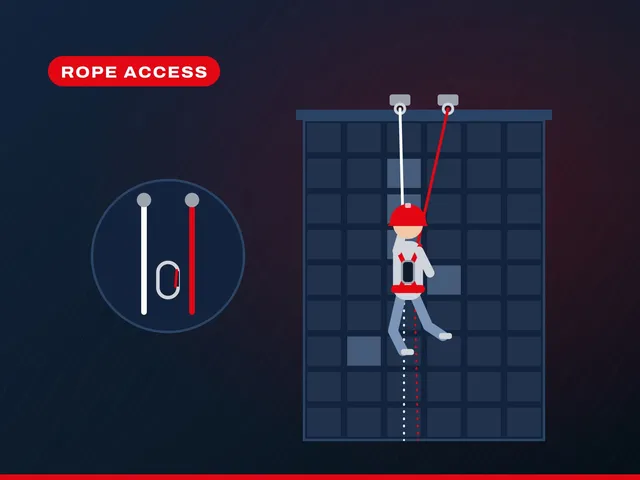
- Two independent systems. The working rope and the safety rope should each have their own anchor, so one failure cannot drop the worker.
- Correct loading direction. Anchors are tested in a given direction. An eye bolt loaded sideways can be far weaker.
- Protect from sharp edges. Slings and ropes over concrete or metal edges need protection.
- Keep sling angles small. In a Y-hang, the wider the angle between the two legs, the higher the force on each anchor. Keep it below about 90°.
- Inspect and record. Permanent anchors need periodic inspection, just like other PPE.
The mistakes we see most often
Tying off to water pipes or gutters, using roof railings held by thin bolts, one anchor for both ropes with no backup, and unprotected slings over a parapet edge.
Selecting and building anchor systems is at the core of TKPK Level 2 and Level 3. Building managers who want their roof anchors checked can contact us.
Related Articles
Regulation 9/2016 Explained: Indonesia's Work-at-Height Safety Rules
Indonesia's main work-at-height regulation in plain language: the five mandatory elements, who must be competent, and what it means for employers.
What Is Rope Access? Meaning, How It Works, and the Rules in Indonesia
A method of working at height with two independent rope systems. How it works, when it is the right choice, and the rules that apply in Indonesia.
Fall Arrest, Fall Restraint, and Work Positioning: What Is the Difference?
Three fall protection terms that are often confused. Which one prevents a fall, which one stops a fall, and why the order matters.