



TKBT Level 1 vs Level 2: Roles, Requirements, and When to Step Up
Two Kemnaker certification grades for workers who climb towers, steel frames, and scaffolds. How they differ, and when it is time to move up to Level 2.
Published · Tim Rope Access Center
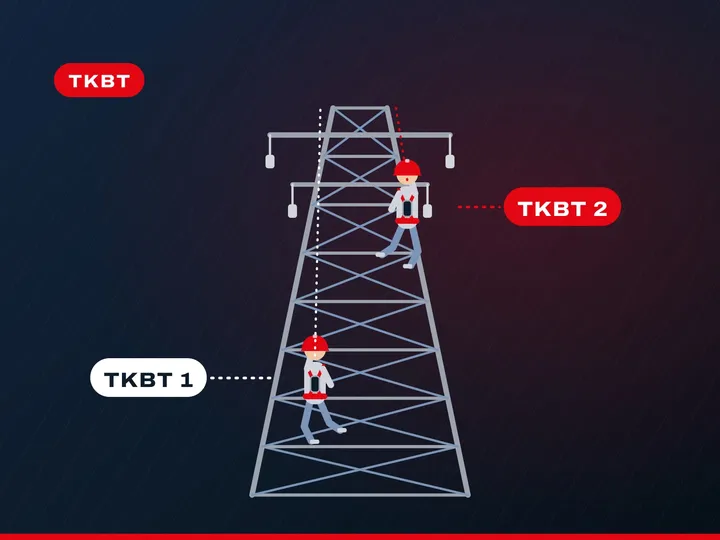
Table of Contents
TKBT — Tenaga Kerja Bangunan Tinggi — is the Kemnaker certification scheme for workers who climb and work on structures: telecom towers, steel frames, scaffolds, and poles. It has two grades. If your work hangs on a rope, you need TKPK instead; we explain the difference in TKPK or TKBT?.
TKBT Level 1: working safely under supervision
TKBT Level 1 is the starting point. It focuses on personal safety: wearing and checking a full body harness, twin lanyards, and fall arresters; climbing and changing anchors while always attached (100% tie-off); and basic rescue and first aid.
Level 1 holders work under the supervision of a Level 2 holder. No previous experience is needed — the main requirements are being at least 18 and medically fit for work at height.
TKBT Level 2: working independently and supervising
TKBT Level 2 adds responsibility for other people and for the work plan:
- assessing structural, weather, and electrical hazards before climbing;
- selecting and installing anchors and temporary lifelines;
- planning safe work steps and leading a rescue from a structure;
- supervising Level 1 workers.
It requires a TKBT Level 1 certificate and documented experience of work at height.
When to step up
Move up to Level 2 when you work on structures routinely, are comfortable with the basics without reminders, and are starting to lead a small team. Keep a record of every job from the start — date, location, type of work, and supervisor’s name — because that record is your evidence of experience when you enrol.
For companies
Build teams with a healthy ratio: every group of Level 1 workers on a structure needs a Level 2 supervisor present on site. For a group from one company, training can run at your site — ask through our training page.
Related Articles
TKPK or TKBT? Choosing a Kemnaker Work-at-Height Certificate
Two Kemnaker schemes for work at height, two different ways of working. A practical guide for technicians and HSE managers choosing the certification they actually need.
Regulation 9/2016 Explained: Indonesia's Work-at-Height Safety Rules
Indonesia's main work-at-height regulation in plain language: the five mandatory elements, who must be competent, and what it means for employers.
How to Choose a Legitimate Rope Access Training Provider: 7 Things to Check
A certificate nobody recognises is no certificate at all. Seven things to check before you pay for rope access or work-at-height training.