



Rope Access Equipment and What It Does: A Complete Beginner's List
From harness to backup device: what goes in a rope access kit, what each item does, and which standards to check before you buy or use it.
Published · Tim Rope Access Center
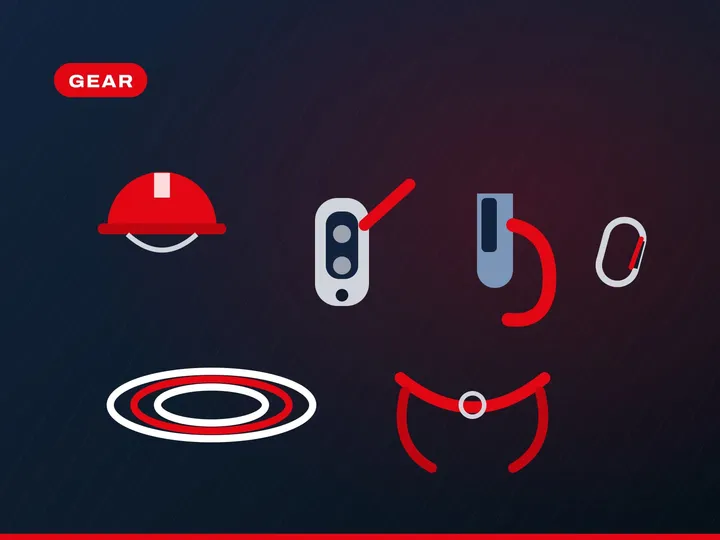
Table of Contents
Rope access relies on equipment designed to hold a person for long periods and to arrest a fall if something fails. Here is what a technician’s standard kit contains, what each item does, and the standards usually marked on the products.
1. Full body harness
The centre of the whole system. A rope access harness has a chest attachment (for fall arrest) and a ventral attachment (for descender and ascenders), plus a seat that keeps the technician comfortable for hours. It usually meets EN 361 (fall arrest harness) and EN 813 (sit harness). How to put one on is covered in how to wear a full body harness.
2. Descender
The device for going down the working rope. The technician controls speed with a handle; releasing it locks the device (anti-panic and auto-lock on work models). Rope adjustment devices like this are tested to EN 12841.
3. Ascenders (chest and hand)
Rope clamps that only slide upward. Used as a pair — one on the chest, one in the hand with a foot loop — so the technician can “walk” up the rope.
4. Backup device (fall arrester)
A device that travels with the technician on the safety rope and locks immediately in a fall. This is what makes the two-rope system truly redundant.
5. Carabiners and connectors
The links between components. For rope access use locking carabiners (screw-lock or auto-lock) to EN 362. Steel for anchors that see abrasion, aluminium to save weight.
6. Static kernmantle rope
Rope with a core (kern) and sheath (mantle) that stretches very little — typically EN 1891 Type A, around 10.5–11 mm. Dynamic climbing rope is not used as a working line.
7. Lanyards, slings, and rope protection
Lanyards connect the harness to devices and anchors. Slings and anchor straps are used to build anchor points. Rope protectors stop the rope rubbing on sharp edges — the most common cause of rope failure.
8. Helmet and other PPE
A helmet with chin strap (EN 12492, or EN 397 with chin strap), gloves, safety boots, and eye protection as the job requires. Chemical or hot work needs additional PPE.
Before you buy
Buy from authorised distributors, keep proof of purchase and serial numbers, and log every item in a PPE inspection system. In our TKPK Level 1 class, trainees practise with all of this equipment before deciding what to buy.
Related Articles
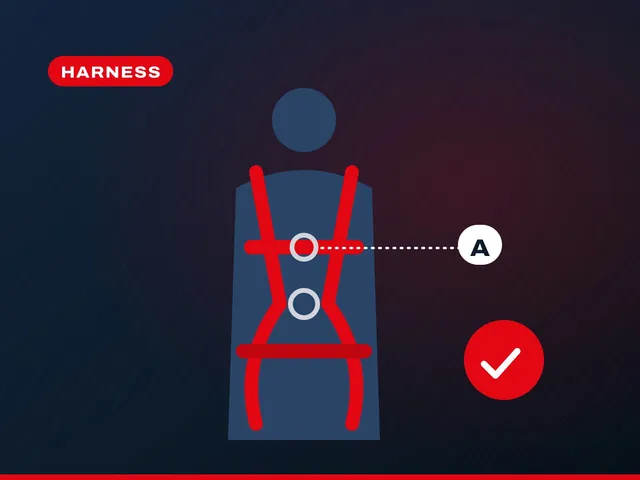
How to Wear a Full Body Harness Correctly: 7 Steps and Common Mistakes
A loose or upside-down harness can injure you when it arrests a fall. Seven steps to wear it correctly, plus the mistakes we see most often.
Inspecting Rope Access PPE: What the Eye Sees, What the Record Misses
The pre-use check is only half the job. The other half is the history that tells you when a piece of kit must retire.
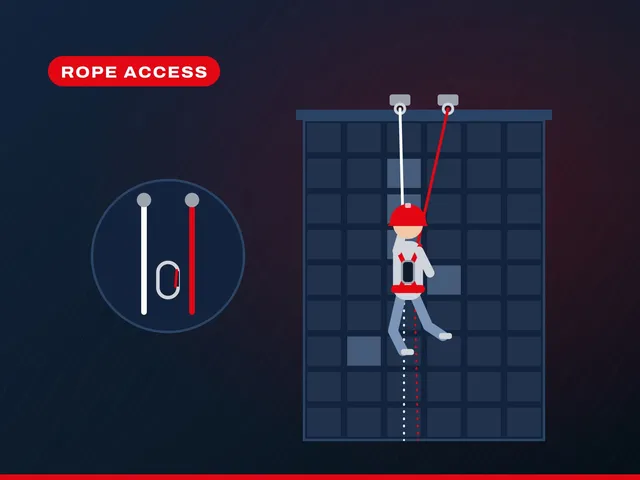
What Is Rope Access? Meaning, How It Works, and the Rules in Indonesia
A method of working at height with two independent rope systems. How it works, when it is the right choice, and the rules that apply in Indonesia.